
Introduction
Aluminium Composite Panel (ACP) is widely used on commercial buildings, office towers, hotels, shopping malls, and residential developments due to its modern appearance, lightweight structure, and durability. While ACP panels are designed to withstand outdoor exposure, they still require regular cleaning and maintenance to preserve their appearance and protect the manufacturer’s warranty.
Many building owners assume rainwater is enough to keep ACP panels clean. In reality, environmental pollutants, dirt, algae, bird droppings, and airborne contaminants gradually accumulate on the surface, causing staining, discoloration, and premature deterioration.
This guide explains why ACP maintenance matters, common problems building owners face, and how professional cleaning helps extend the lifespan of ACP façades.
Why ACP Maintenance Matters
ACP panels are often one of the most visible architectural features of a building. Dirty or poorly maintained panels can negatively affect the property’s appearance and value.
Regular ACP cleaning provides several benefits:
- Maintains a professional and attractive building appearance
- Prevents long-term staining and discoloration
- Reduces buildup of pollutants and contaminants
- Extends the lifespan of panel coatings and finishes
- Helps preserve manufacturer warranty requirements
- Minimizes costly restoration or replacement work
Many ACP manufacturers recommend routine cleaning as part of their maintenance guidelines. Neglecting maintenance may result in permanent staining that cannot be removed through normal cleaning methods.
Common ACP Problems
While property size certainly affects manpower requirements, it is only one part of the equation.
-
1. Dirt and Pollution Buildup
Buildings located near busy roads, industrial areas, or construction sites are exposed to significant amounts of airborne dust and pollution. Over time, these contaminants create a dull, dirty appearance on ACP surfaces.
-
2. Water Stains and Mineral Deposits
Rainwater can leave behind mineral deposits, especially around panel joints and drainage areas. These stains become more visible on darker-colored ACP panels.
-
3. Algae, Mold, and Mildew Growth
Buildings in tropical climates often experience biological growth due to high humidity and frequent rainfall. Green or black staining can develop on shaded façade sections.
-
4. Bird Droppings
Bird droppings contain acidic compounds that may damage ACP coatings if left untreated for extended periods.
-
5. Incorrect Cleaning Methods
One of the most common causes of ACP damage is improper cleaning. Using abrasive pads, strong acids, harsh alkaline chemicals, or high-pressure washing can scratch or permanently damage the panel finish.
Professional ACP Cleaning Solutions
Professional ACP cleaning focuses on removing contaminants safely without affecting the panel coating.
A typical ACP cleaning process includes:
-
Initial Inspection
The cleaning team assesses the façade condition, identifies staining issues, and determines the appropriate cleaning method.
-
Surface Dust Removal
Loose dirt, dust, and debris are removed before wet cleaning begins.
-
Controlled Chemical Cleaning
Specialized façade cleaning chemicals with suitable pH levels are applied to break down dirt and environmental contaminants without damaging the ACP coating.
-
Gentle Agitation and Washing
Soft brushes, microfiber tools, and non-abrasive cleaning equipment are used to clean the surface effectively.
-
Final Rinse and Quality Inspection
The panels are rinsed thoroughly and inspected to ensure a consistent finish across the façade.
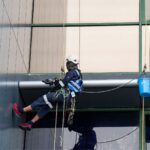
For high-rise buildings, rope access systems are often used to safely access difficult areas while minimizing disruption to building operations.
ACP Cleaning and Warranty Protection
Many building owners are unaware that façade maintenance can directly affect warranty coverage.
Most ACP manufacturers provide warranties against coating failure, delamination, or other manufacturing defects. However, these warranties often require the building owner to perform routine cleaning and maintenance.
Failure to maintain ACP panels properly may result in:
- Permanent staining
- Surface deterioration
- Reduced coating performance
- Potential warranty disputes
Maintaining proper cleaning records and engaging qualified cleaning contractors helps demonstrate that the building has been maintained according to recommended standards.
Case Study:
Commercial Building Façade Restoration
A commercial office building experienced visible staining and discoloration on its ACP façade after several years without professional maintenance.
The property management team initially believed the panels required repainting or replacement. After a detailed inspection, professional ACP cleaning was performed using approved façade cleaning methods and non-abrasive cleaning solutions.
Following the cleaning process:
- Surface staining was significantly reduced
- Original panel appearance was restored
- Building presentation improved noticeably
- Replacement costs were avoided
This demonstrates how routine maintenance can often prevent major restoration expenses.
Conclusion
ACP panels are a long-term investment that contribute significantly to a building’s appearance and value. Regular cleaning and maintenance help protect that investment by preserving aesthetics, extending panel lifespan, and supporting warranty compliance.
Whether for commercial buildings, hotels, shopping centres, or residential developments, a structured ACP maintenance program is far more cost-effective than dealing with premature façade deterioration or panel replacement.
Professional ACP cleaning ensures the right equipment, access methods, and cleaning solutions are used to keep façades looking their best while protecting the integrity of the panel system for years to come.